
Osaka is one of Japan's great food cities — a place where eating is part of the experience of exploring the city. From sizzling takoyaki and okonomiyaki to crispy kushikatsu, Osaka food is casual, flavorful, and closely tied to the city's lively personality.
The city has long been known for its love of food. The expression kuidaore (食い倒れ) — often interpreted as eating so extravagantly that you spend yourself into ruin — has become closely associated with Osaka. Its food culture grew alongside the city's history as a major center of commerce, where ingredients from across Japan arrived and helped shape a remarkably rich culinary tradition.
So, what should you actually eat in Osaka? Here are five local foods worth knowing, from the classics almost every visitor recognizes to a couple of Osaka specialties you may not have heard of yet. And because this is Japan, some of those famous local flavors have even found their way into the snack aisle.
Why Is Osaka So Famous for Food?
Osaka's reputation as a food city didn't appear overnight. During the Edo period, the city developed into an important center of commerce and distribution, with ingredients and goods arriving from across Japan. Its importance as a commercial and distribution center helped earn Osaka the nickname Tenka no Daidokoro (天下の台所), often translated as "the Nation's Kitchen."
But history is only part of the story. What makes Osaka food especially fun is how approachable much of it feels. Some of the city's most famous dishes are cooked right in front of you on hot griddles, sold from casual shops, or enjoyed at counters where the atmosphere is part of the experience.
Then there is konamon (粉もん), the broad family of flour-based foods closely associated with Osaka and the wider Kansai region. Takoyaki and okonomiyaki are the famous stars, but Osaka's food culture goes well beyond those two dishes.
Here are five Osaka foods worth putting on your list.
1. Takoyaki: Osaka's Most Famous Street Food
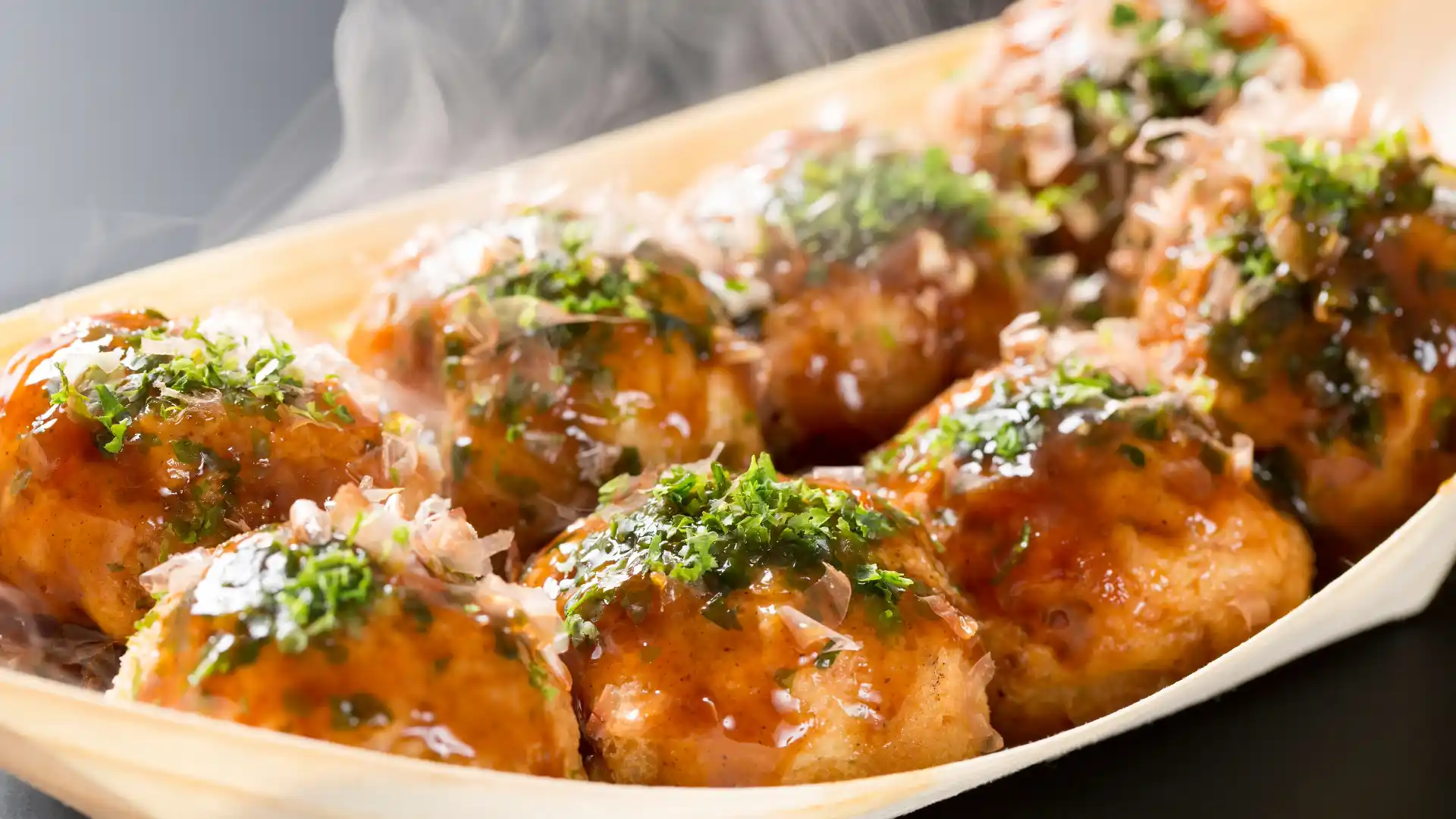
If one food had to represent Osaka, takoyaki would be a very strong candidate.
These small round balls are made from a savory flour-and-dashi batter cooked in a special molded pan, with a piece of octopus tucked inside. They're usually finished with a sweet-savory sauce, mayonnaise, aonori seaweed, and delicate bonito flakes.
For someone trying takoyaki for the first time, the texture may be the biggest surprise. A good Osaka-style takoyaki can be lightly cooked on the outside while remaining wonderfully soft and almost creamy inside. The bonito flakes on top may even appear to "dance" as heat rises from the freshly cooked takoyaki.
There is, however, one important piece of advice: give it a moment before taking a huge bite. Fresh takoyaki can be extremely hot in the center, and discovering that with an entire takoyaki already in your mouth is something of an Osaka tourist initiation.
Takoyaki is casual, easy to share, and found all over the city. In busy food districts, watching vendors rapidly turn rows of takoyaki on their hot plates is almost as much fun as eating them.
2. Okonomiyaki: The Osaka Classic Cooked on a Griddle
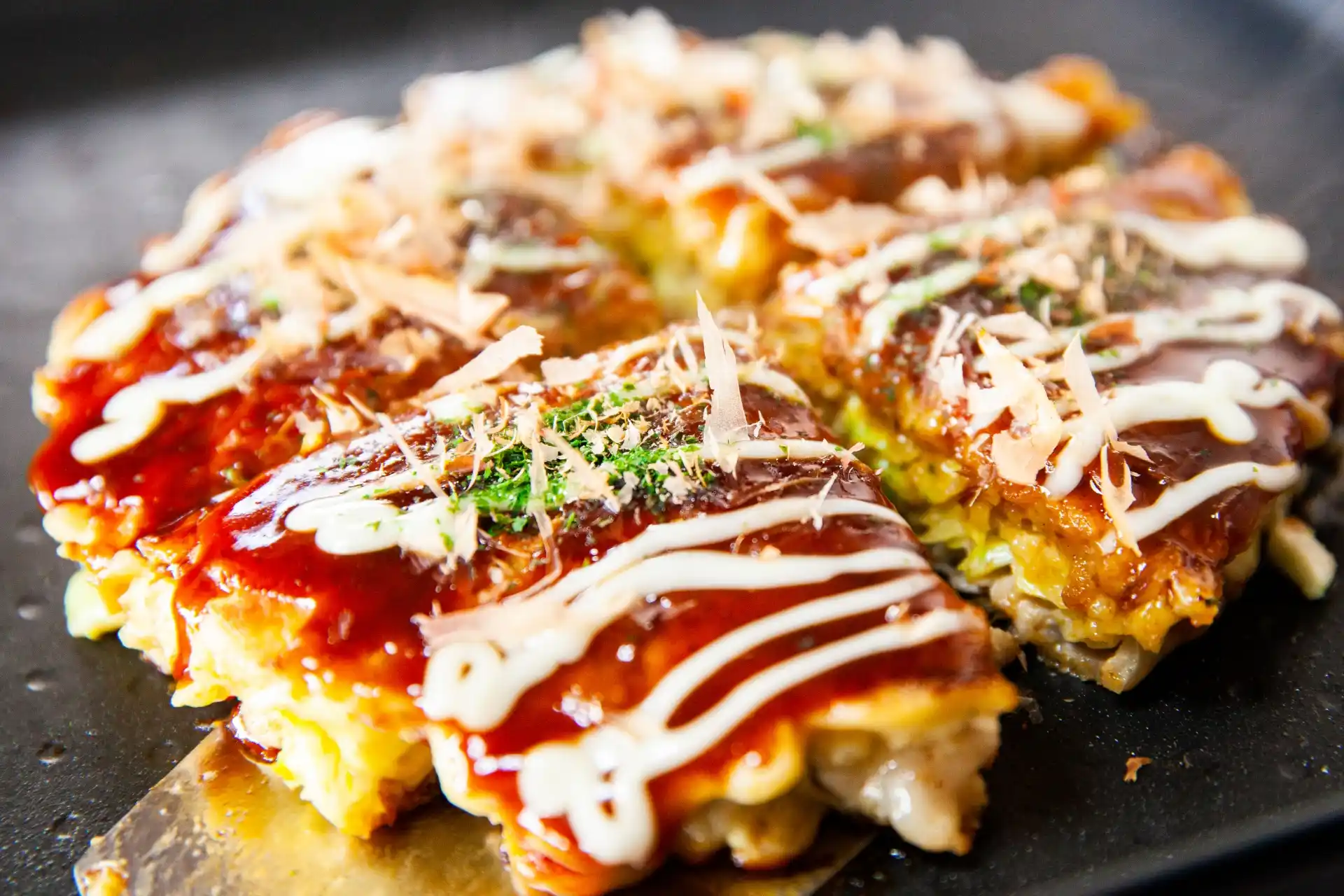
Next comes okonomiyaki, another dish that is inseparable from Osaka's food culture.
It's often described in English as a "Japanese savory pancake," which is useful but doesn't quite tell the whole story. Osaka-style okonomiyaki typically combines a flour-and-dashi batter with plenty of cabbage and ingredients such as pork or seafood. The mixture is cooked into a thick round on a hot griddle and usually finished with okonomiyaki sauce, mayonnaise, aonori, and bonito flakes.
The name gives you a clue to the spirit of the dish. Okonomi means something along the lines of "what you like," while yaki refers to grilling or cooking. Different restaurants offer different ingredients and toppings, and part of the appeal is finding your preferred combination.
Osaka-style okonomiyaki is also different from the famous Hiroshima version. In Osaka, the ingredients are generally mixed together before cooking, while Hiroshima-style okonomiyaki is built in layers and commonly includes noodles.
There's another little detail about Osaka that sometimes surprises visitors: some people eat okonomiyaki with rice. Yes, flour-based okonomiyaki plus rice means carbohydrates with carbohydrates. Osaka seems perfectly comfortable with this arrangement.
3. Kushikatsu: Osaka's Crispy Skewers
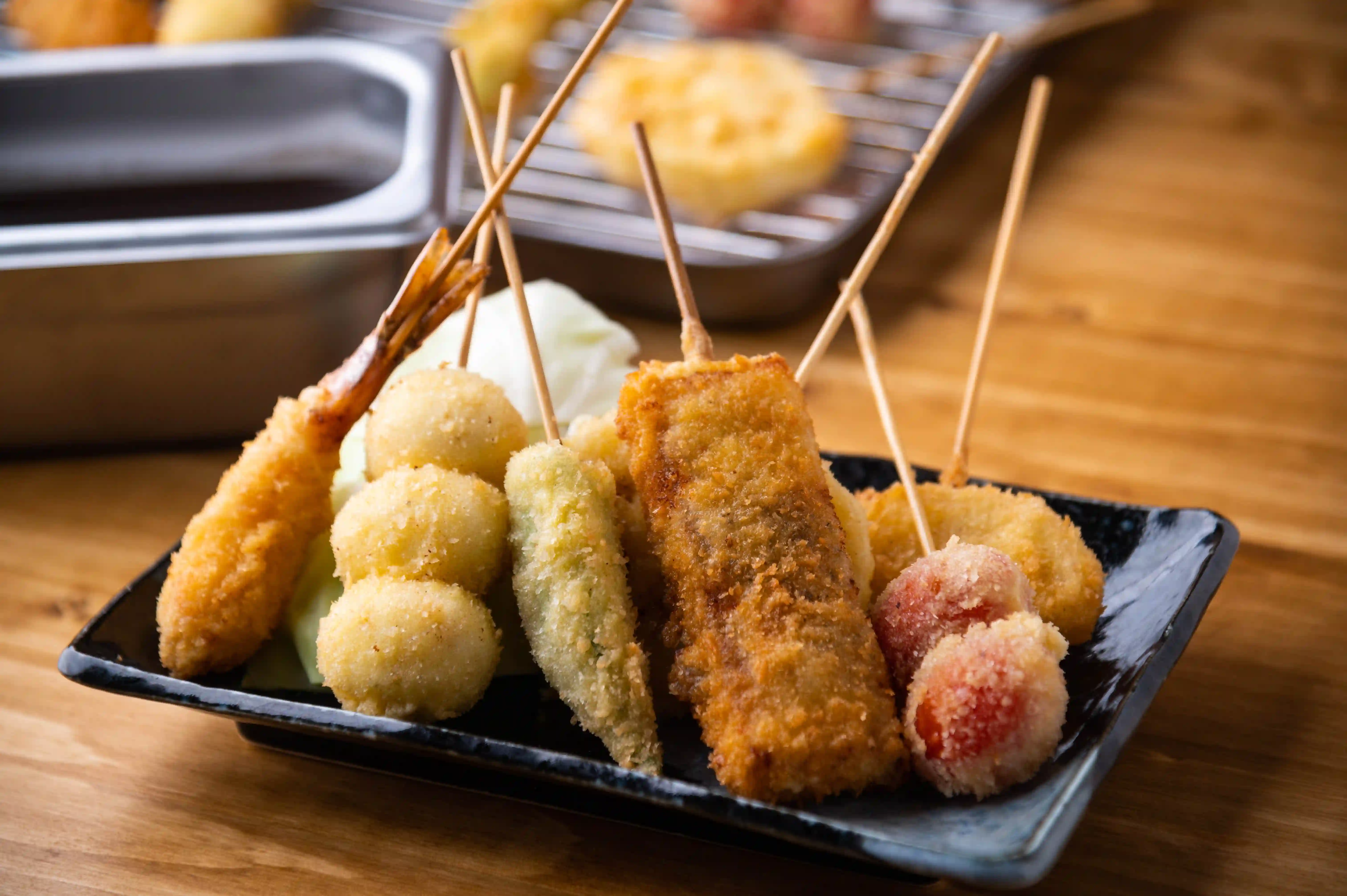
If takoyaki and okonomiyaki represent Osaka's love of flour-based comfort food, kushikatsu shows another side of the city.
Kushikatsu consists of ingredients placed on skewers, coated in batter and breadcrumbs, and deep-fried until crisp. Beef, pork, shrimp, vegetables, cheese, and many other ingredients can all receive the kushikatsu treatment.
The dish is particularly associated with Shinsekai, the old-school Osaka neighborhood around Tsutenkaku, where kushikatsu restaurants are part of the local scenery. Ordering several different skewers and trying them one by one is part of the experience.
Kushikatsu is also famous for one rule: no double dipping. Traditionally, diners shared containers of dipping sauce, so once you had taken a bite from a skewer, it was not supposed to go back into the communal sauce. Many restaurants today serve sauce differently, but the famous rule remains part of Osaka kushikatsu culture.
It's simple food, but that's part of its charm: hot, crisp, casual, and very easy to keep ordering.
4. Negiyaki: Okonomiyaki's Lesser-Known Cousin
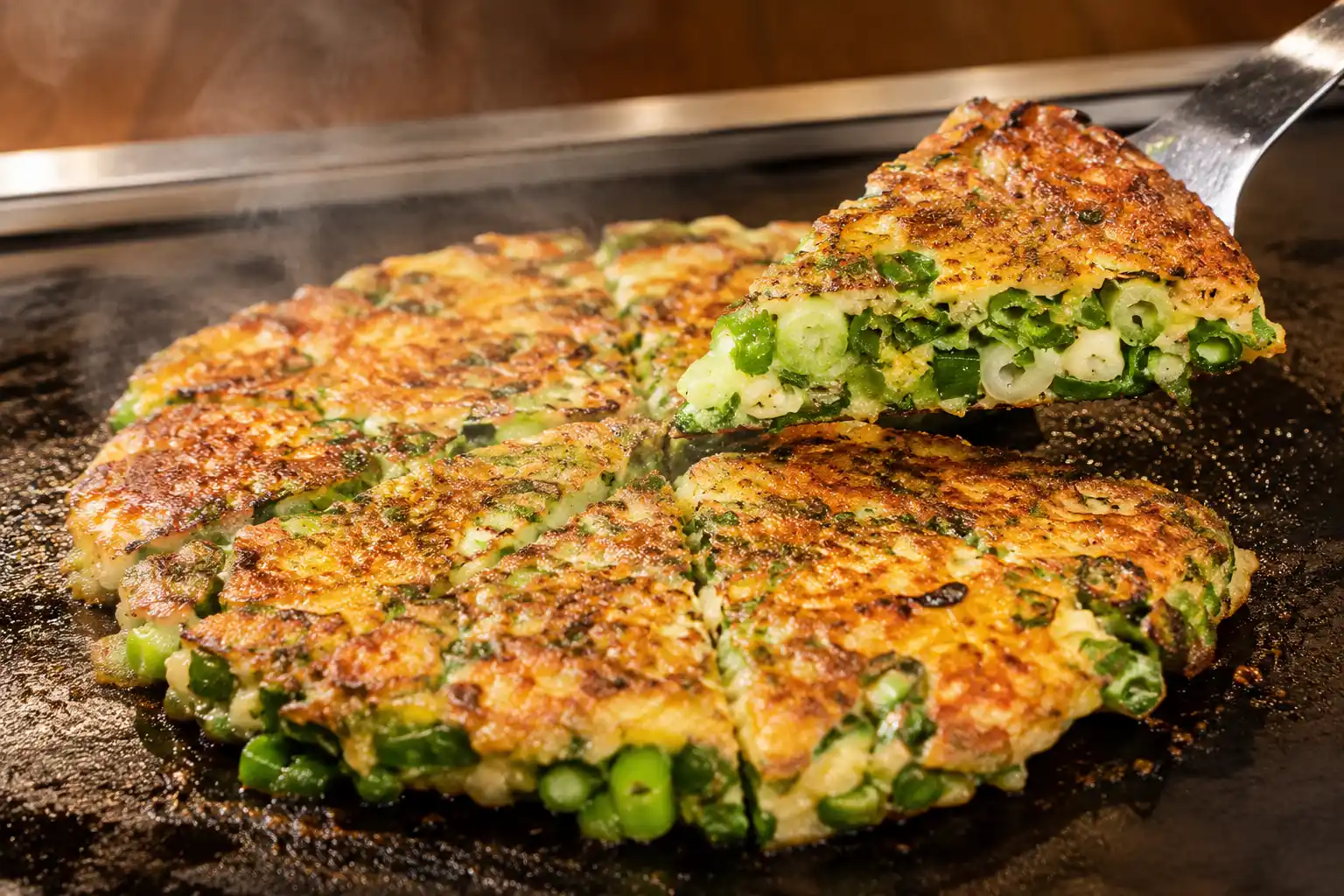
Visitors usually arrive in Osaka knowing about takoyaki and okonomiyaki. Negiyaki is where things start getting a little more local.
At first glance, negiyaki can look similar to okonomiyaki, but the emphasis is different. As the name suggests — negi means green onion — the dish is packed with chopped green onions rather than relying heavily on cabbage.
The result tends to feel lighter and more aromatic than a typical okonomiyaki, with the flavor of the green onions playing a much bigger role. Depending on the shop, it may be served with a soy-based seasoning rather than the thick sweet-savory sauce most visitors associate with okonomiyaki.
That makes negiyaki a great next step after trying Osaka's most famous dishes. It still belongs to the city's broader flour-based food culture, but it shows how much variation can exist within something as seemingly simple as batter cooked on a griddle.
If you've already eaten okonomiyaki and thought you understood Osaka's konamon culture, negiyaki may convince you there's still more to discover.
5. Doteyaki: A Deeper Taste of Osaka
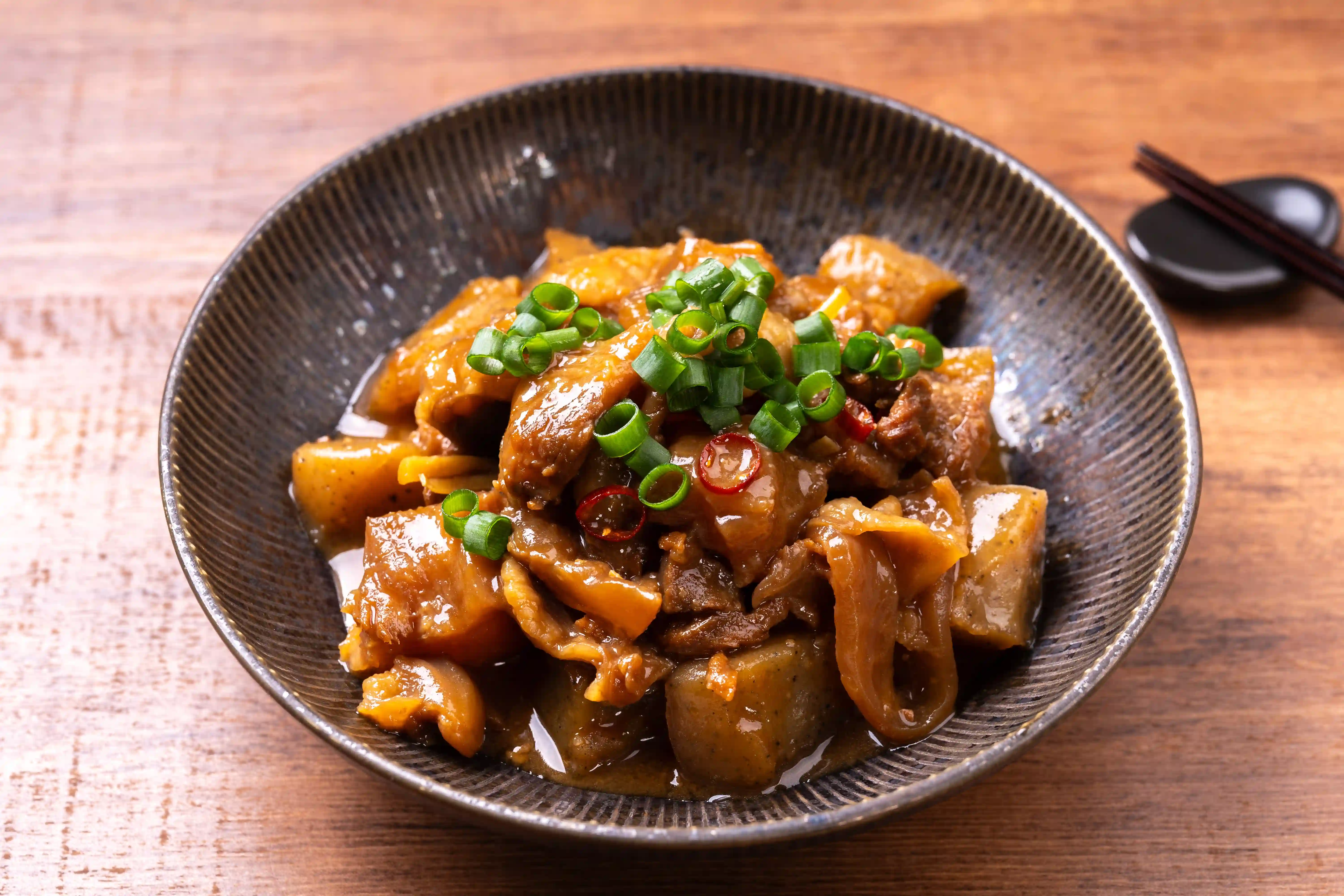
Then there's doteyaki, which takes us away from the world of flour and hot griddles.
Doteyaki is a traditional Osaka dish made by slowly simmering beef tendon with ingredients such as miso and mirin until the meat becomes tender and the sauce rich and deeply savory.
The name is commonly linked to an older cooking method in which miso was placed around the edge of a pot like a dote, or embankment, and gradually mixed into the dish as it cooked.
Compared with takoyaki or okonomiyaki, doteyaki isn't necessarily a dish every international visitor knows before arriving in Japan — and that's precisely why it belongs in this guide. It's rich, comforting, a little more old-school, and particularly at home in the casual drinking spots and food culture of areas such as Shinsekai.
If takoyaki and okonomiyaki are the Osaka everyone knows, doteyaki offers a taste of a more local side of the city.
Where to Experience Osaka Food Culture
You don't need to chase a single restaurant to experience Osaka food culture. In fact, part of the fun is exploring neighborhoods where food seems to be everywhere.
Dotonbori and the wider Minami area are obvious starting points for first-time visitors. Giant restaurant signs, takoyaki stands, okonomiyaki restaurants, and crowds moving between them make food part of the scenery itself.
For kushikatsu and doteyaki, head toward Shinsekai, around the Tsutenkaku area. The neighborhood has a very different atmosphere from polished modern Osaka, and its casual restaurants are a natural fit for these old-school local foods.
Markets and shopping streets are another way to see how broad Osaka food can be. Rather than thinking of the city simply as "the place for takoyaki," wandering through its food districts reveals seafood, meat, produce, cooked foods, sweets, and plenty of things you probably didn't plan on eating until you saw them.
When Osaka Food Becomes Japanese Snacks
Here's where Osaka food culture takes a particularly Japanese turn: a famous local dish doesn't necessarily stay on the plate.
Japan has a huge culture of regional and limited-edition snack flavors, and familiar Osaka tastes often inspire souvenir snacks and packaged foods. You may come across savory snacks inspired by takoyaki, okonomiyaki sauce, and other flavors associated with Osaka in souvenir shops, train stations, supermarkets, and other stores. These regional snacks are also a popular choice for omiyage, the Japanese custom of bringing back local treats from a trip.
It makes sense when you think about what makes Osaka's famous foods so recognizable. Takoyaki and okonomiyaki both combine sweet-savory sauce, dashi, aonori, and other umami-rich flavors. Those flavors can translate surprisingly well into crackers, chips, rice snacks, and other packaged foods.
So yes, you can eat a real okonomiyaki in Osaka and later encounter a snack attempting to taste like the okonomiyaki you just ate. Somehow, that feels completely normal in Japan.
For travelers, these snacks are also a fun introduction to regional Japanese snack culture. Different parts of Japan have their own famous dishes and ingredients, and snack makers regularly turn those local identities into flavors you can carry home in a bag or box.
What Should You Eat First in Osaka?
If it's your first time in Osaka, start with takoyaki and okonomiyaki. They're the obvious choices, but they're famous for a reason, and both introduce you immediately to the flavors and textures associated with Osaka's konamon culture.
From there, try kushikatsu, especially if you're visiting Shinsekai. Negiyaki is a good choice when you want to go one step beyond the foods every visitor already knows, while doteyaki offers something completely different from the flour-based dishes that dominate Osaka's international image.
More importantly, don't approach Osaka food like a checklist. Part of the experience is wandering through the city, smelling something cooking, seeing a line outside a tiny shop, and changing your plans because whatever is on that griddle suddenly looks much more interesting than what you intended to eat.
Osaka Is a City You Can Understand Through Food
Osaka's most famous dishes aren't elaborate fine dining. Many are foods designed to be eaten casually: standing near a shop, sitting around a hot griddle, ordering another skewer at a counter, or sharing a plate with friends.
That informality tells you something about the city itself. Osaka's food culture can be lively and playful, but underneath it is a long history of commerce, ingredients, craftsmanship, and people who take eating very seriously — even when the food itself doesn't look serious at all.
Takoyaki and okonomiyaki may be the dishes that first bring visitors into Osaka's food world, but they're only the beginning. Try the kushikatsu, discover negiyaki, order something local you've never heard of, and keep an eye on the snack aisle afterward.
Because in Osaka, even after dinner is over, the flavor of the city has a habit of following you around.