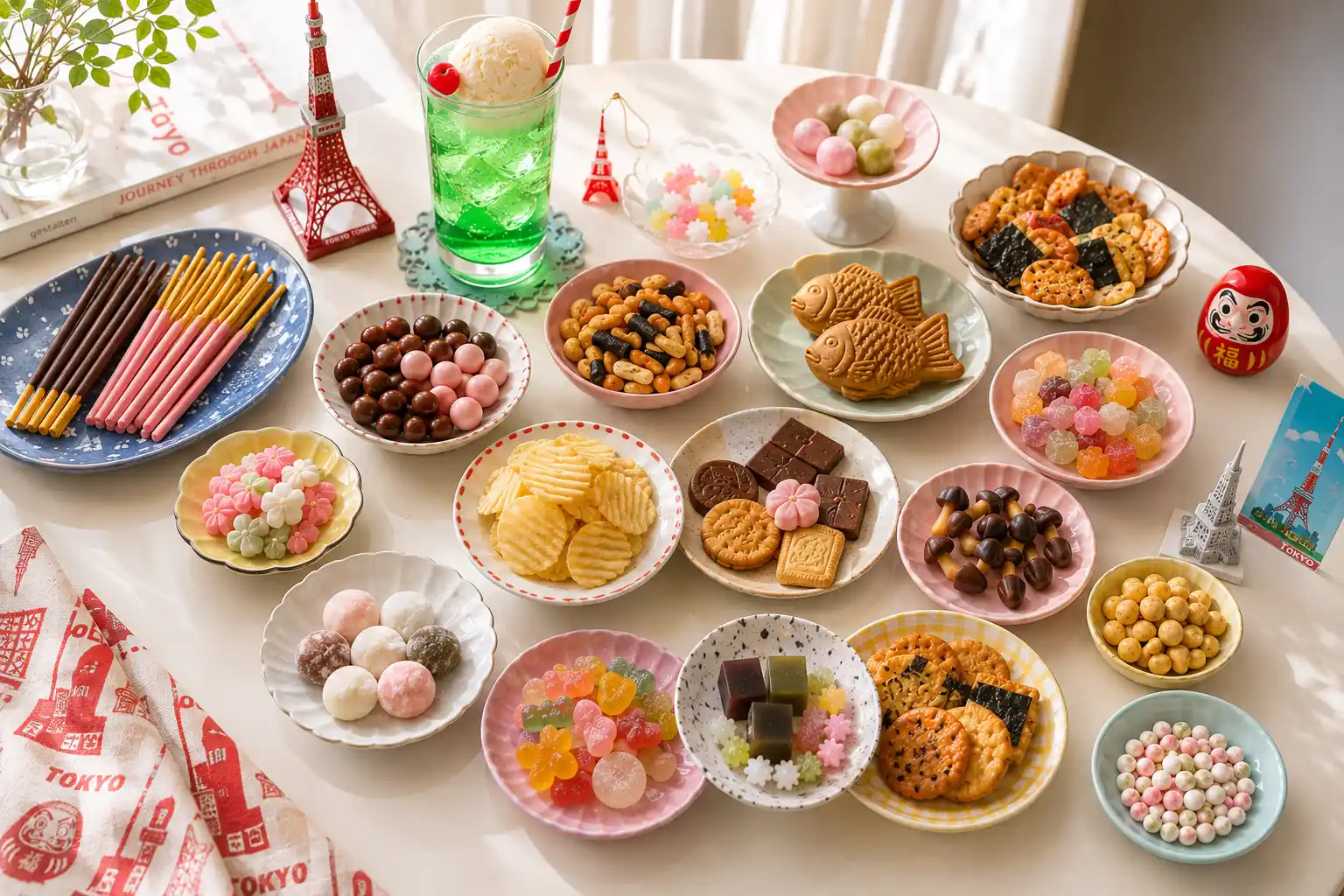
Picture this: you walk into a Japanese convenience store planning to grab a drink and leave.
A few minutes later, you're still standing in the snack aisle, surrounded by colorful packages, seasonal flavors, tiny chocolates, rice crackers, gummies, and things you can't quite identify — but suddenly really want to try.
That feeling of curiosity is one of the best introductions to Japanese snack culture.
Japanese snacks are known around the world for their variety, creative flavors, playful packaging, and surprising attention to detail. But what makes them special goes far beyond matcha chocolate or cute characters.
From seasonality and regional traditions to texture, packaging, and the constant arrival of limited-edition flavors, snacks in Japan often reflect something bigger about Japanese food culture itself.
If you're new to Japanese snacks, here's where the fun begins.
1. Japanese Snacks Come in an Incredible Variety
The first thing you'll notice is just how much there is to choose from.
Walk through a Japanese supermarket or convenience store and you'll find chocolate, gummies, cookies, potato chips, rice crackers, candy, cakes, wafers, mochi, traditional sweets, and plenty of things that don't fit neatly into any category.
And even familiar snacks often come with a Japanese twist.
Chocolate might be flavored with matcha or strawberry. Crackers may use soy sauce, seaweed, or local ingredients. Gummies range from soft and juicy to surprisingly firm and chewy.
Then there are snacks that have become icons in their own right — Pocky, Koala's March, Kinoko no Yama, Takenoko no Sato, Jagarico, Hi-Chew, and countless others.
Japanese snack culture isn't really one category.
It's more like several snack universes sharing the same shelf.
2. Texture Matters Just as Much as Flavor
One of the most underrated things about Japanese snacks is texture.
That perfect snap of a biscuit stick. The light crunch of a corn snack. A rice cracker that breaks with a sharp crack. A gummy with just the right amount of bounce.
Japanese snack makers pay close attention to how a product feels when you eat it — not just how it tastes.
You'll find snacks that are crispy, crunchy, fluffy, chewy, creamy, airy, soft, or sometimes several of those things at once.
That's part of why even a simple-looking snack can be surprisingly memorable.
Sometimes the flavor gets your attention.
The texture is what makes you reach for another one.
3. Seasons Change — and So Do the Snacks
Seasonality is a major part of Japanese food culture, and the snack aisle follows the calendar too.
Spring often brings strawberry and sakura-inspired sweets. Summer leans toward refreshing fruit and citrus flavors. Autumn is full of sweet potato, chestnut, and other rich seasonal tastes, while winter tends to bring plenty of chocolate and indulgent limited editions.
And many of them don't stick around for long.
That's what makes seasonal Japanese snacks so much fun.
You aren't simply buying a flavor. You're buying something connected to a particular moment of the year.
Come back a few months later, and the shelves may look completely different.
4. Limited Editions Turn Snack Shopping Into a Treasure Hunt
Japan loves a limited edition.
There are seasonal releases, regional flavors, collaborations, new packaging designs, and products that appear for only a short time before disappearing again.
For anyone who loves discovering new food, this makes a normal trip to the store surprisingly entertaining.
You start out thinking:
"Do I really need another snack?"
And then the dangerous thought arrives:
"What if I never see this flavor again?"
That's usually how the snack ends up in your basket.
The constant rotation also means there is always something new to find, even if you've been exploring Japanese snacks for years.
5. Japanese Convenience Stores Are Where the Adventure Really Starts
If Japanese snacks have a natural habitat, it might be the konbini — Japan's convenience stores.
7-Eleven, FamilyMart, Lawson, and other convenience stores are everywhere, and their shelves are packed with chocolates, chips, gummies, crackers, sweets, desserts, drinks, and private-label products.
But the fun isn't only in the quantity.
The selection changes constantly.
New products arrive, seasonal flavors appear, collaborations come and go, and convenience-store-exclusive items give people another reason to check what's new.
You walk in for a coffee.
You come out carrying three snacks you'd never heard of ten minutes earlier.
It happens.
For visitors to Japan, a Japanese convenience store snack aisle is one of the easiest — and cheapest — ways to experience everyday Japanese food culture.
6. Regional Snacks Let You Taste Different Parts of Japan
Travel around Japan and the snack selection changes with you.
Different regions are known for different ingredients and specialties, and many of them find their way into sweets and snacks.
Hokkaido is famous for ingredients such as dairy products and potatoes. Kyoto is closely associated with matcha and traditional sweets. Okinawa is known for flavors such as brown sugar and tropical ingredients, while other regions have their own fruits, teas, rice products, and local specialties.
These ingredients appear in everything from cookies and chocolates to crackers and beautifully packaged souvenir sweets.
This is closely connected to Japan's culture of omiyage — bringing back local gifts from a trip for friends, family, or coworkers.
In Japan, a snack can be more than something to eat.
Sometimes it's a little piece of a place.
7. Packaging Is Part of the Experience
Before you even taste a Japanese snack, chances are the package has already done some work.
Japanese snack packaging can be colorful, cute, nostalgic, elegant, minimalist, seasonal, or wonderfully strange.
Sometimes there's a character smiling back at you. Sometimes the package looks almost too beautiful to open.
And yes, sometimes the cute face on the box is absolutely part of why you buy it.
Japan's well-known kawaii culture appears everywhere in snacks, from mascots and cartoon designs to playful shapes and collectible packaging.
But presentation isn't just about cuteness.
Premium sweets often use refined designs and individual wrapping, while seasonal products may feature colors and imagery tied to a particular time of year.
The package is part of the experience — not an afterthought.
8. Traditional Flavors Meet Modern Snack Ideas
Another fascinating part of Japanese snack culture is the way old and new constantly mix.
Traditional Japanese ingredients such as matcha, hojicha, red bean, black sesame, kinako, yuzu, and sweet potato appear in modern chocolates, cookies, cakes, candies, and other treats.
At the same time, familiar flavors like chocolate, caramel, strawberry, and cheese remain extremely popular.
The result is a snack culture that doesn't force you to choose between traditional and modern.
You can eat a centuries-old style of Japanese sweet one moment and open a modern matcha chocolate the next.
Somehow, both feel completely at home.
9. Japanese Snacks Can Be Cute, Nostalgic, Elegant — or Just Plain Fun
There isn't one single "Japanese snack style."
Some products are colorful and playful.
Some are the kinds of snacks Japanese adults remember eating as children.
Others are beautifully packaged sweets designed to be given as gifts, served with tea, or enjoyed as a small luxury.
That's part of what makes Japanese snacks so interesting.
They can be nostalgic and modern at the same time. Everyday and premium. Cute and sophisticated.
And sometimes they're simply delicious little things that make you happy for five minutes.
That's a perfectly good reason too.
So, Where Should a Beginner Start?
With so many choices, the first Japanese snack aisle can feel a little overwhelming.
But you don't need to try everything at once.
A good introduction might include a few completely different styles:
- a classic Japanese chocolate snack
- something salty and crunchy
- a Japanese gummy or candy
- a matcha-flavored sweet
- a rice cracker or traditional-inspired snack
- a seasonal or limited-edition surprise
- something you'd never normally choose for yourself
That last one is important.
Half the fun of discovering Japanese snacks is trying something you didn't know you wanted.
So, What Makes Japanese Snacks So Special?
There isn't one answer.
It's the attention to texture. The constant creativity. The way the seasons appear on store shelves. The regional flavors. The thoughtful packaging. The characters. The limited editions. The mix of traditional ingredients and modern ideas.
Taken together, they turn something as ordinary as buying a snack into a small experience.
You don't need to begin with the most famous Japanese snack, and you definitely don't need to try everything at once.
Pick something that catches your eye. Try a flavor you've never had before. See where it takes you.
Because sometimes, discovering Japan can start with something as simple as opening a snack.
Explore Our Boxes →