One of the most interesting things about Japanese snacks is that many of their flavors come from ingredients that have been part of everyday Japanese food culture for generations.
A chocolate bar or bag of chips may look familiar at first, but the flavor might come from roasted green tea, yuzu citrus, soybean flour, black sesame, or sweet red bean paste. These ingredients are not simply novelty flavors created for snacks. Many of them have long histories in Japanese cooking, tea culture, and traditional sweets.
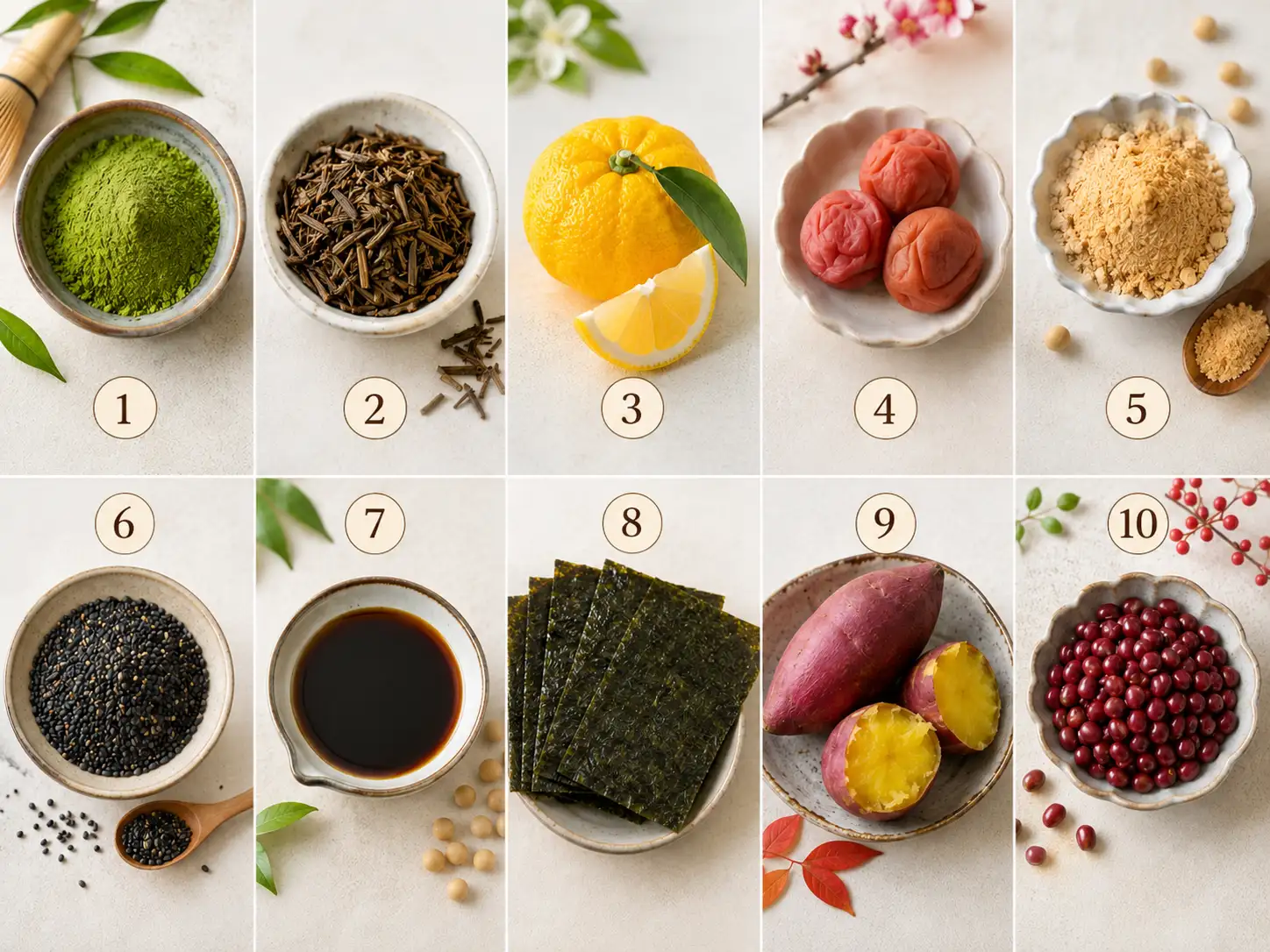
Here are ten ingredients worth knowing if you want to understand Japanese snacks a little better.
1. Matcha
Matcha is one of the most internationally recognized Japanese flavors.
It is made from specially grown green tea leaves that are processed and ground into a fine powder. Unlike regular brewed tea, where the leaves are removed after steeping, matcha is consumed as the whole powdered leaf, giving it a deeper flavor and distinctive green color.
Its taste can be earthy, vegetal, slightly bitter, and rich in umami, which makes it especially good at balancing sweetness.
In traditional Japanese culture, matcha is closely associated with the tea ceremony, but today it appears in a huge variety of modern sweets and snacks, including chocolate, cookies, cakes, candies, ice cream, and wafers.
That contrast between bitterness and sweetness is a major part of why matcha works so well in confectionery.
If you want to learn more about where Japanese matcha comes from — beyond Kyoto, into Shizuoka and Kagoshima — and the matcha sweets that bring it to life, see our longer guide: Japanese Matcha Sweets Beyond Kyoto: Shizuoka & Kagoshima.
2. Hojicha
Hojicha is another Japanese tea flavor, but it tastes very different from matcha.
It is made by roasting green tea leaves and stems, which creates a warm, toasted aroma and reduces much of the grassy bitterness normally associated with green tea.
The result is mellow, slightly smoky, and sometimes almost nutty or caramel-like.
Hojicha has traditionally been enjoyed as an everyday tea, but in recent years it has become increasingly common in desserts and packaged sweets. You may find hojicha-flavored chocolate, cookies, cakes, ice cream, and cream-filled biscuits.
Its softer flavor makes it appealing even to people who find matcha too bitter.
3. Yuzu
Yuzu is a highly aromatic citrus fruit used throughout Japanese cuisine.
Its flavor is often described as somewhere between lemon, mandarin, and grapefruit, but its fragrance is what really makes it distinctive. The aroma is bright, floral, and immediately recognizable.
Yuzu has long been used in sauces, seasonings, drinks, and traditional dishes, and it has also become a popular flavor in candies and snacks.
You may encounter yuzu in gummies, hard candies, chocolates, cookies, drinks, and even savory snacks such as potato chips.
It gives snacks a fresh citrus character without tasting exactly like lemon or orange.
4. Ume
Ume is often translated as “Japanese plum,” although botanically it is more closely related to apricots.
In Japan, ume is particularly famous in the form of umeboshi, the intensely sour and salty preserved fruit commonly eaten with rice.
That distinctive sweet-sour-salty character has inspired a wide variety of snacks.
Ume-flavored candies and gummies often emphasize the fruitier, sweeter side, while potato chips, rice crackers, and other savory snacks may imitate the sharper flavor of umeboshi.
For people visiting Japan for the first time, ume can be one of the more surprising flavors because it does not fit neatly into the usual categories of simply “sweet” or “sour.”
5. Kinako
Kinako is roasted soybean flour.
Soybeans are roasted and ground into a fine powder, creating a warm, nutty aroma and a naturally mild sweetness.
Kinako has been used in Japanese sweets for centuries. It is commonly sprinkled over mochi and is especially familiar in desserts such as kinako mochi and warabi mochi.
Today, the same flavor appears in chocolate, cookies, candies, cream-filled snacks, and other modern sweets.
Because it is roasted, kinako can sometimes remind international visitors of peanut, toasted nuts, or even lightly roasted cereal, although the flavor is distinctly its own.
6. Black Sesame
Black sesame, or kuro goma, has a deep roasted flavor and a rich, slightly nutty character.
Sesame has long been used in Japanese cooking, from sauces and dressings to sweets and desserts. In confectionery, black sesame may be ground into a paste or powder and combined with sugar, cream, chocolate, or milk.
You can find it in cookies, chocolates, ice cream, pudding, cakes, and traditional sweets.
Its dark gray or almost black appearance can look unusual if you are unfamiliar with it, but the flavor is usually mellow, aromatic, and surprisingly easy to enjoy.
7. Soy Sauce
Soy sauce is one of the foundations of Japanese cooking, but it is also an important snack flavor.
Its salty and savory character works especially well with rice crackers, potato chips, corn snacks, and baked snacks.
One of the most classic examples is senbei, Japanese rice crackers, which are often brushed or seasoned with soy sauce before being grilled or baked.
Soy sauce can also be combined with other ingredients such as butter, seaweed, garlic, or sugar, creating flavors that range from deeply savory to slightly sweet.
For many Japanese people, soy sauce-flavored snacks feel familiar rather than unusual because the seasoning is already so central to everyday food.
8. Seaweed
Seaweed is another ingredient that appears throughout Japanese cuisine and snack culture.
Two names you will often see are nori, the familiar sheets of dried seaweed used with sushi and rice, and aonori, a finely powdered green seaweed commonly used as a seasoning.
Seaweed adds a savory, slightly ocean-like aroma and works especially well with salty snacks.
It is commonly used in rice crackers, potato chips, corn snacks, popcorn, and other crunchy foods.
For international visitors, seaweed-flavored chips may sound unusual at first, but in Japan it is one of the most familiar savory snack flavors.
9. Sweet Potato
Sweet potato, or satsumaimo, is particularly associated with autumn in Japan.
Japanese sweet potatoes are naturally sweet and often become soft, dense, and almost creamy when roasted. One of the most beloved ways to eat them is yaki imo, roasted sweet potato, which has long been a familiar cold-weather food.
That flavor has inspired a huge variety of seasonal sweets and snacks.
In autumn, you may see sweet potato chocolate, cookies, cakes, chips, candies, ice cream, and pastries appearing across supermarkets and convenience stores.
Many products try to recreate the warm, caramelized sweetness of freshly roasted yaki imo, which is why sweet potato has become such a recognizable seasonal snack flavor.
10. Azuki
Azuki, or red bean, has been one of the most important ingredients in Japanese sweets for centuries.
The beans are cooked with sugar to make anko, sweet red bean paste, which appears in many traditional foods such as dorayaki, taiyaki, manju, mochi, and other wagashi.
Anko can be smooth or slightly chunky depending on how it is prepared, but its sweetness is generally softer and less intense than many Western-style fillings.
Modern snack companies also use azuki-inspired flavors in chocolates, wafers, cookies, cakes, and ice cream.
For anyone interested in Japanese sweets, understanding azuki is especially useful because it appears in so many traditional and modern products.
Traditional Ingredients, Modern Snacks
What makes these ingredients interesting is that most of them were not invented for the snack aisle.
Matcha and hojicha come from Japanese tea culture. Kinako, sesame, and azuki have long histories in traditional sweets. Soy sauce and seaweed are everyday ingredients in Japanese cooking, while yuzu, ume, and sweet potato are closely connected with regional and seasonal food traditions.
Modern Japanese snacks take these familiar flavors and transform them into chocolate bars, gummies, cookies, chips, candies, and countless limited-edition products.
That is one reason exploring a Japanese snack aisle can be so interesting: even when the format feels familiar, the flavor may carry a much older piece of Japanese food culture with it.
Once you know what these ingredients are, choosing Japanese snacks becomes a little less mysterious—and a lot more fun.
Visit OneBite Japan →