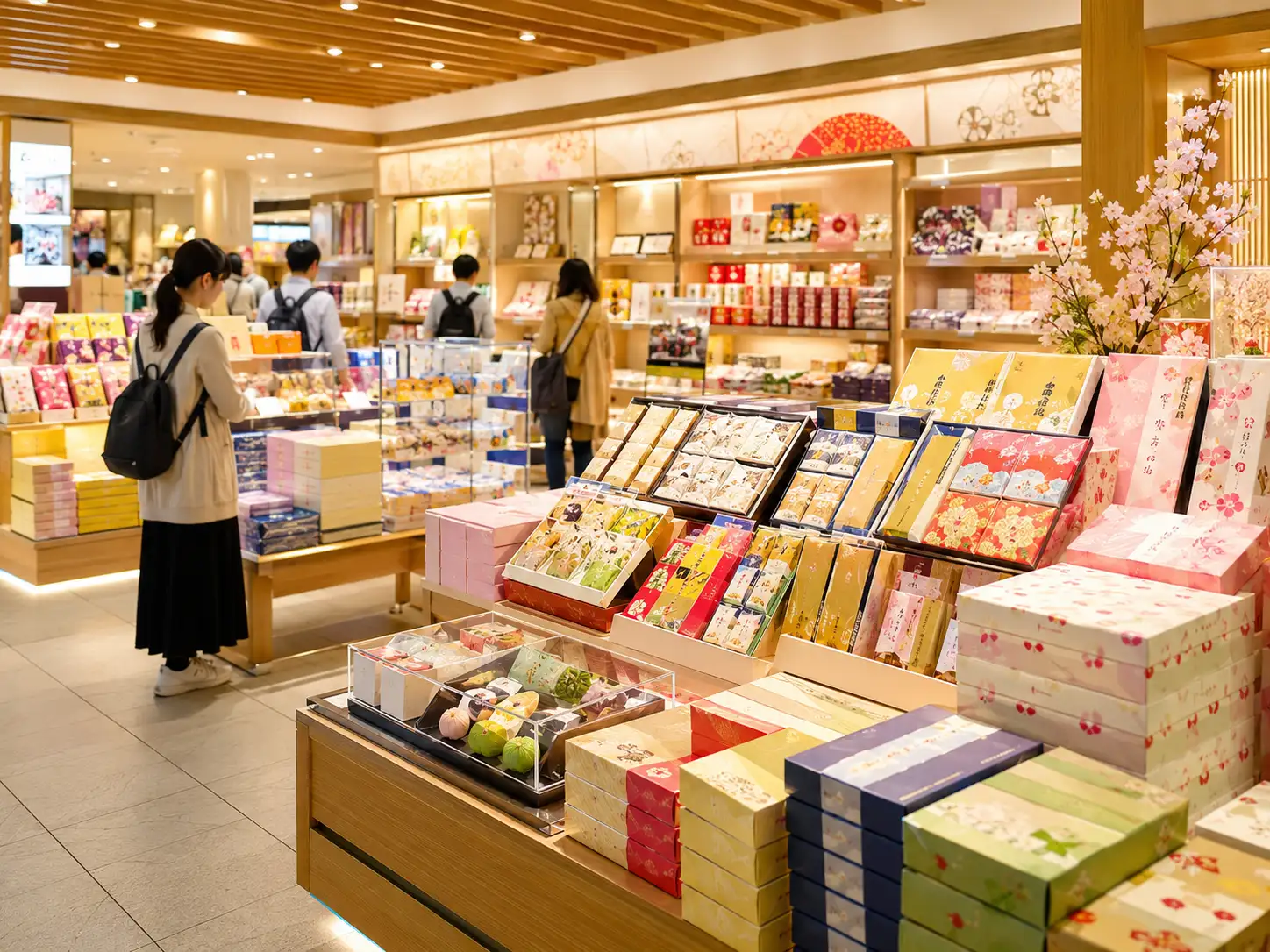
If you have ever traveled with Japanese friends or coworkers, you may have noticed a familiar pattern. No matter where they go, they often come back with a box or bag of local sweets to share.
This is not just a personal habit. It is part of a long-established Japanese custom called omiyage.
For many people outside Japan, the idea of buying snacks specifically to give away after a trip may feel unusual. In Japan, however, omiyage is closely connected with travel, regional identity, and consideration for the people waiting back home.
What Is Omiyage?
Omiyage refers to souvenirs brought back from a trip, and edible gifts are especially common.
Unlike a souvenir you might buy mainly for yourself, omiyage is often intended for family members, friends, classmates, or coworkers. That is why so many Japanese omiyage products come in neatly designed boxes filled with individually wrapped pieces that are easy to share.
The custom is so familiar that major train stations, airports, highway rest areas, and tourist destinations across Japan have large sections devoted to omiyage. Travelers can often find shelves filled with local cookies, cakes, rice crackers, chocolates, and other specialties associated with the place they have visited.
Choosing what to bring home can become part of the travel experience itself.
Why Do Japanese People Give Omiyage?
Omiyage is not simply about bringing back something tasty. It can also be a small way of showing that you thought about other people while you were away.
A box of local sweets may communicate something as simple as, “I remembered you during my trip.”
In workplaces, omiyage is also common after someone returns from a holiday or business trip. Not everyone does it every time, and it is not a strict rule, but bringing back something that can be shared among coworkers is a familiar gesture.
Part of the appeal is that the gift does not need to be expensive or elaborate. A small regional snack can be enough because the meaning comes from the gesture and from sharing something connected with the place you visited.
Why Are Omiyage Snacks Usually Individually Wrapped?
Anyone who has browsed Japanese souvenir shops has probably noticed how carefully omiyage is packaged.
Many boxes contain individually wrapped pieces, which makes them easy to distribute among a family, office, or group of friends. Individual wrapping also helps keep the product fresh and makes it easier for several people to enjoy the same box over time.
The outer packaging often matters too.
Boxes may feature famous landmarks, local ingredients, seasonal colors, traditional patterns, or illustrations connected with the region. In many cases, the design is part of what makes the product feel special.
This attention to presentation helps turn a simple snack into something that feels appropriate to give as a gift.
How Do People Choose Omiyage?
There are no official rules, but a few practical habits are common.
The first is to choose something connected with the place you visited. A regional flavor or well-known local specialty usually feels more meaningful than something that can easily be purchased anywhere in Japan.
Another consideration is how easy the item is to share. A box containing many individually wrapped pieces is especially useful when the omiyage is intended for coworkers or a large family.
Shelf life also matters. Travelers may not be able to give the gift immediately after returning home, so products that can be stored for several days or weeks are often convenient.
These practical considerations help explain why Japanese stations and airports are filled with beautifully packaged sweets designed specifically for travelers.
Regional Specialties Are Part of the Fun
One of the most enjoyable parts of omiyage culture is the enormous variety of regional specialties found across Japan.
Different prefectures and cities are associated with different ingredients, sweets, and flavors. Some products have been local favorites for generations, while others are modern creations inspired by regional agriculture or tourism.
A trip around Japan can therefore become a kind of edible map of the country.
Hokkaido
Hokkaido is particularly famous for sweets made with dairy products.
The region’s milk, butter, and cream are widely used in cookies, cakes, chocolates, and other desserts. Melon-flavored sweets are also common, reflecting Hokkaido’s reputation for high-quality fruit.
Because of this strong connection with dairy and agriculture, Hokkaido has become one of Japan’s most popular destinations for souvenir sweets.
Kyoto
Kyoto is strongly associated with traditional Japanese confectionery and tea.
Matcha sweets are especially popular, and travelers can find everything from delicate wagashi to cookies, chocolates, cakes, and modern desserts flavored with green tea.
Many Kyoto omiyage products also emphasize elegant packaging and traditional design, reflecting the city’s long cultural history.
Hiroshima
Hiroshima is famous for momiji manju, a maple-leaf-shaped cake traditionally filled with sweet red bean paste.
The shape is inspired by maple leaves, which are closely associated with nearby Miyajima. Today, momiji manju comes in a wide range of fillings, including custard, chocolate, matcha, and other flavors.
It remains one of the most recognizable regional sweets in western Japan.
Fukuoka
Fukuoka has a wide variety of regional omiyage.
Popular choices include sweets inspired by Amaou strawberries, baked confections such as Hakata Torimon, and savory snacks flavored with mentaiko, the spicy cod roe strongly associated with the region.
These products show how both sweet and savory local flavors can become part of omiyage culture.
Osaka
Osaka is known for its lively food culture, and many of its souvenir products have a playful character.
Travelers can find sweets and savory snacks inspired by famous Osaka foods, as well as colorful packages that reflect the city’s energetic image.
The connection between local identity and food is especially strong here, making omiyage shopping another way to experience the personality of the city.
Omiyage and Regional Pride
Omiyage also reflects how strongly food is connected with place in Japan.
Many regions take pride in particular fruits, tea varieties, traditional sweets, seafood products, or local recipes. Turning these ingredients into souvenir products helps visitors associate a flavor with a specific destination.
This is also why limited regional versions of familiar snacks are so popular. A nationally known candy or cookie may appear in a flavor associated with a particular prefecture, giving travelers something that feels connected with their trip.
Even when a regional product becomes available online or at special events elsewhere in Japan, its identity often remains closely tied to the place where it originated.
More Than a Souvenir
Perhaps the most interesting thing about omiyage is that it sits somewhere between a souvenir and a small social gesture.
The snack itself may be simple, but the act of bringing it back creates a connection between the trip and the people who were not there.
Someone travels to Hokkaido and returns with butter cookies. Someone visits Kyoto and brings matcha sweets to the office. Someone comes home from Hiroshima with a box of momiji manju for the family.
The food becomes a small part of the story of the trip.
A Small Tradition That Says a Lot About Japan
Omiyage does not need to be expensive, rare, or luxurious.
What matters is that it comes from somewhere you visited and that you thought to share it.
That combination of regional food, thoughtful presentation, and sharing with others has helped make omiyage an enduring part of Japanese travel culture.
For visitors to Japan, browsing an omiyage shop can be much more interesting once you understand what all those carefully wrapped boxes are for. They are not simply snacks sitting on a shelf.
They are small pieces of a journey, waiting to be taken home and shared.
Visit OneBite Japan →